
Quick answer
A synthetic 512×512 RGBA source was created with a transparent canvas and one centered purple circle. The same rendered source was exported through the current Favicon.now core package with ordinary and maskable outputs enabled.
- Last verified
- July 31, 2026
- Evidence
- Primary documentation plus transparent editorial analysis
- Primary sources
- 1
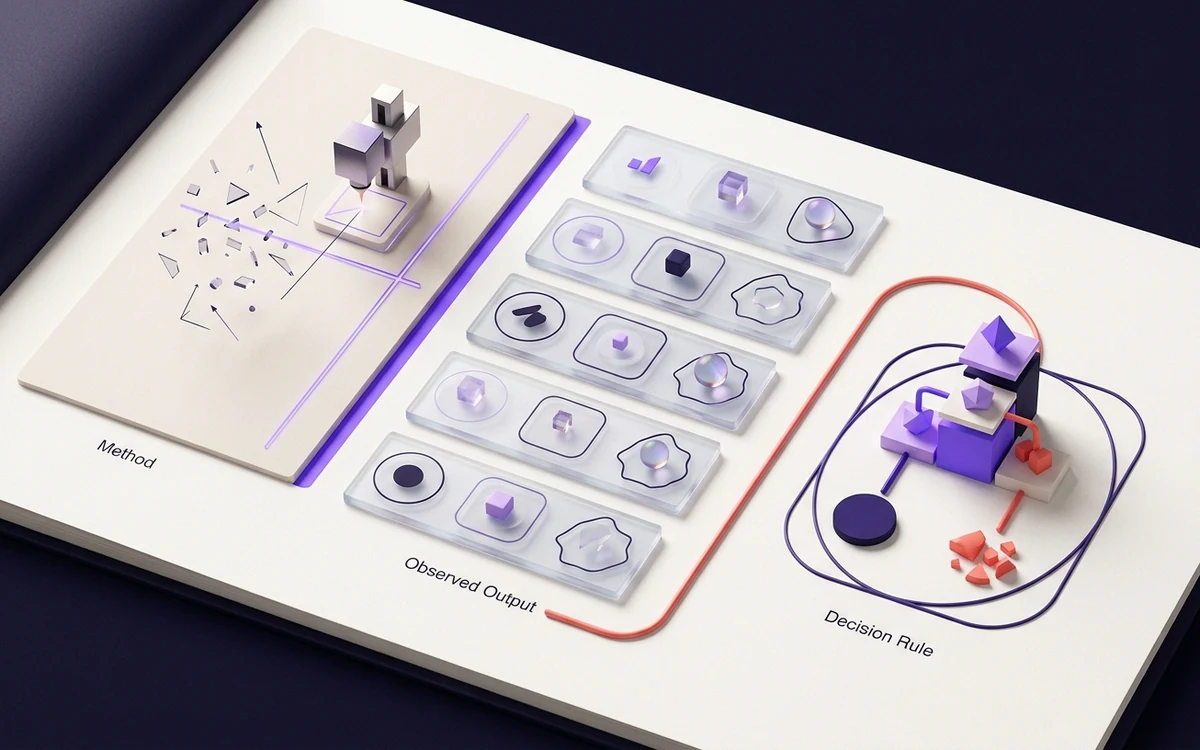
Method
A synthetic 512×512 RGBA source was created with a transparent canvas and one centered purple circle. The same rendered source was exported through the current Favicon.now core package with ordinary and maskable outputs enabled.
The generated archive and each file were inspected programmatically; the raw measurements are published in the compatibility-lab dataset.
Connected next stepCase Study: Turning a Wordmark Into a 16px Favicon for the closest prerequisite or comparison.
Observed output
The core package contained 14 documented files. The transparent 48×48 PNG was 1,344 bytes, the 180×180 Apple output was 5,072 bytes, the ordinary 512×512 app icon was 2,297 bytes, and the full-bleed maskable 512×512 output was 7,475 bytes.
The maskable image is larger because it includes a solid field and a protected, inset copy of the source. That extra composition prevents an adaptive crop from presenting the transparent mark as an undersized floating dot.
Connected next stepWhy Is My Favicon Showing a Blank White Square? for the next connected implementation decision.
Decision rule
Keep transparency for tabs when it improves the silhouette, but generate a separate maskable asset with a deliberate background and safe-zone placement. Do not change only the manifest purpose keyword; the pixels must be recomposed too.
Connected next stepBuild the separate maskable composition and verify the decision with a working output.
Review the headings, sources, implementation artifact, and update record for this guide as structured JSON.
Download guide evidence ↓- Guide
- Case Study: A Transparent Mark Inside a Maskable Icon
- Coverage
- Client behavior can change by browser, operating system, platform version, cache state and deployment configuration. Unperformed manual observations are not claimed.
Questions, answered
Are these production-user results?+
No. They are reproducible measurements from a disclosed synthetic input and the current generator build.
Why publish byte sizes?+
They make the test repeatable and expose how composition affects output weight without implying visual quality from file size alone.