
Emoji Favicon Generator
Create an emoji favicon with controlled scale, padding, background, real-size previews, and consistent ICO, PNG, Apple, and PWA exports.
This is how a clear favicon helps your result feel recognizable.
Turn a platform-dependent emoji glyph into a stable site icon
Emoji look different across operating systems, browsers, and font vendors. The studio lets you choose and size a glyph, then rasterizes the rendered result into a consistent package instead of asking every visitor’s device to draw its own version.
A bold background gives most emoji enough contrast in crowded tabs. Leave space around complex symbols and check the 16-pixel result closely: facial features, flags, and multi-part emoji often lose meaning sooner than simple stars, plants, or geometric marks.
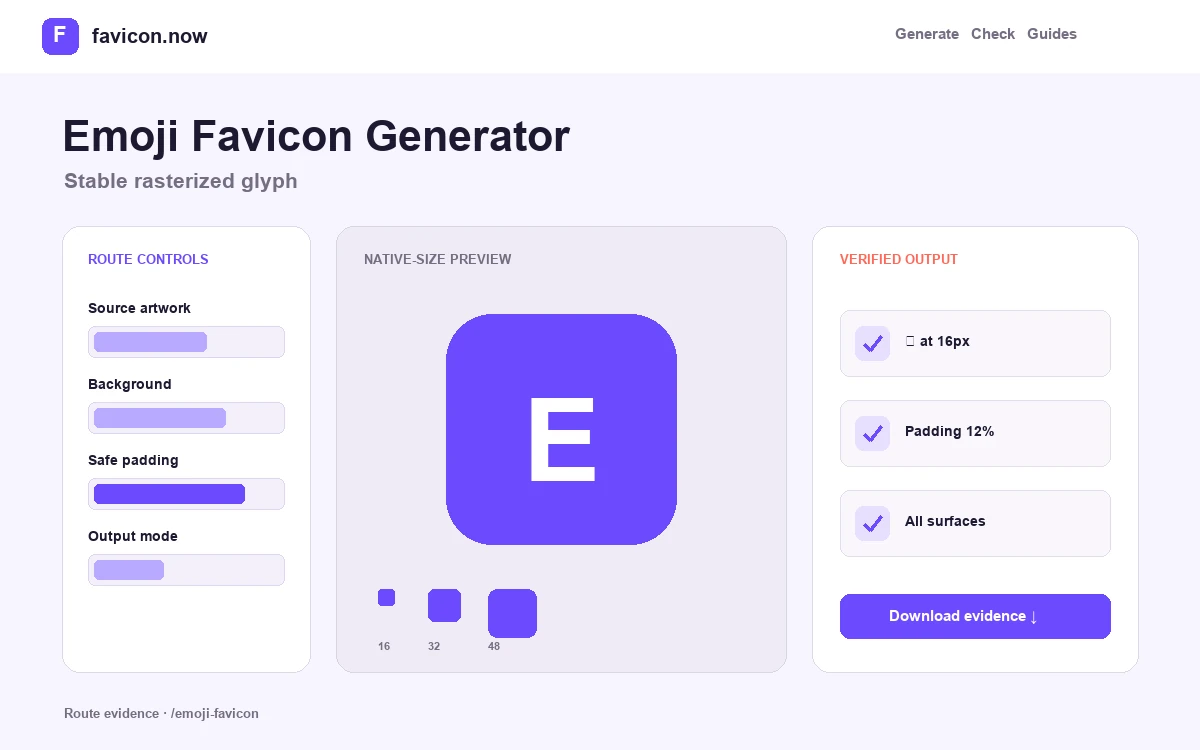
Expect glyph variation before export
The editor reflects the emoji font available in your current browser. Once exported, the favicon uses pixels from that rendering, so visitors receive a stable image rather than a live font glyph.
Prefer one simple code point
Joined sequences, skin-tone modifiers, and flags can render inconsistently during editing. A single high-contrast symbol is easier to center and remains recognizable after aggressive downsampling.
Check usage and brand fit
Unicode defines characters, while artwork styles come from platform vendors. Avoid implying ownership of a vendor’s branded emoji design and choose a symbol that matches the site’s tone.
Note the operating system, browser, and emoji font used for the approved rendering because the editable glyph can differ between creation devices. Compare the symbol with and without a background, lower its scale until the outer shape has breathing room, and confirm that joined sequences have not separated. Once accepted, use the rasterized files as the stable production identity; do not recreate the live emoji with a text node in each browser.
Freeze one emoji rendering for every visitor
The editable glyph can look different on Apple, Google, Microsoft, or Linux systems. Exporting converts the chosen rendering into image pixels, giving the public site one predictable favicon instead of a live character that changes by device.
Note the creation environment
Record the browser, operating system, and visible glyph used for approval. This explains later differences if another editor opens the same Unicode character with a different emoji font.
Test the full silhouette
Inspect the outer shape at 16×16. Flags, faces, and joined sequences often lose important features; a star, plant, object, or single geometric symbol usually survives with less padding.
Deploy rasterized outputs
Use the generated ICO and PNG files as the public identity. Do not replace them with a text emoji in HTML or SVG unless cross-platform glyph differences are intentional.
Choose the simplest symbol that still matches the site. Meaning that depends on a tiny facial expression or multiple joined characters is fragile at tab size.
Check contrast and redundant meaning →Emoji favicon FAQ
Will the emoji look the same on every device?+
The exported favicon will, because it is rasterized. The editing preview can differ depending on the emoji font installed on the device used to create it.
Why does my emoji look crowded?+
Many glyphs already fill their font box. Reduce Symbol size or increase safe padding until the 16×16 preview has a clean outer silhouette.
Can an emoji favicon have transparency?+
Yes, though a solid or gradient background usually gives detailed emoji more consistent contrast across browser themes.
From favicon idea to verified deployment
Follow one clear path through creation, inspection, installation, and troubleshooting.